B2B Trade / Network Intelligence — 2026
Turning a broker's 1,000+ contacts into an intelligent deal pipeline.
Brokers and traders in global commerce have always known the problem: thousands of contacts, dozens of live deals, and no efficient way to connect the right person to the right opportunity. Neta Bridge is built to solve that — starting with contact ingestion and deal tracking.
NETABRIDGE
01 — The Origin
A broker with 7,000 contacts and no way to search them.
Our co-founder had spent years in international trade. He'd spoken to enough brokers to know their shared frustration: thousands of WhatsApp contacts, hundreds of active deals, and no system to surface “who do I know that can supply X, right now?” The problem wasn't the quantity of relationships. Brokers are deeply networked. The problem was that their network was locked in unstructured devices — phones, spreadsheets, memory — with no searchable, trackable layer on top.
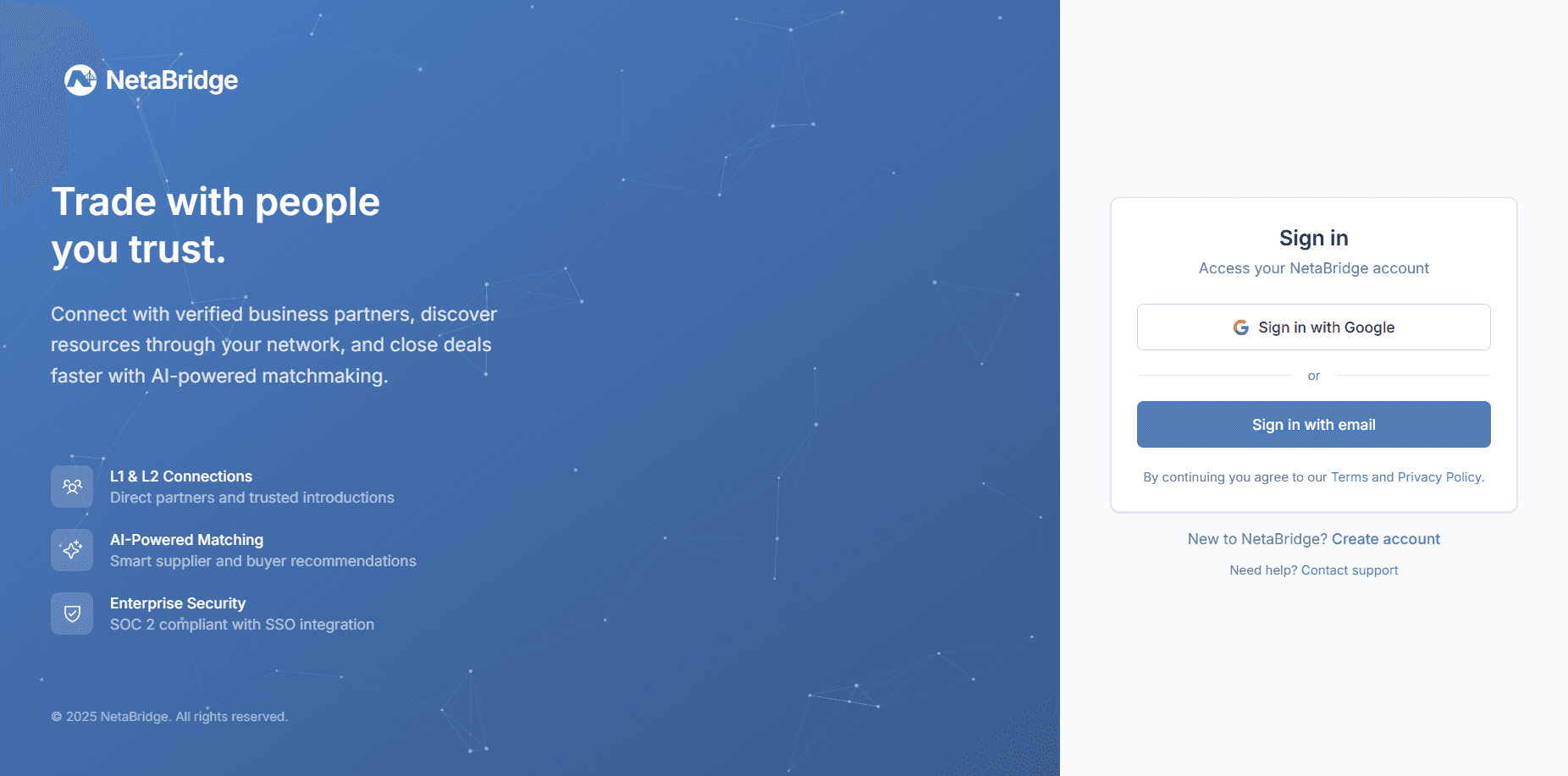
“The answer: a contact ingestion pipeline paired with a deal-tracking interface. Not a marketplace to meet strangers — a system to unlock the value of relationships they already have.”
02 — The Product
Contact ingestion. Deal tracking. Network intelligence.
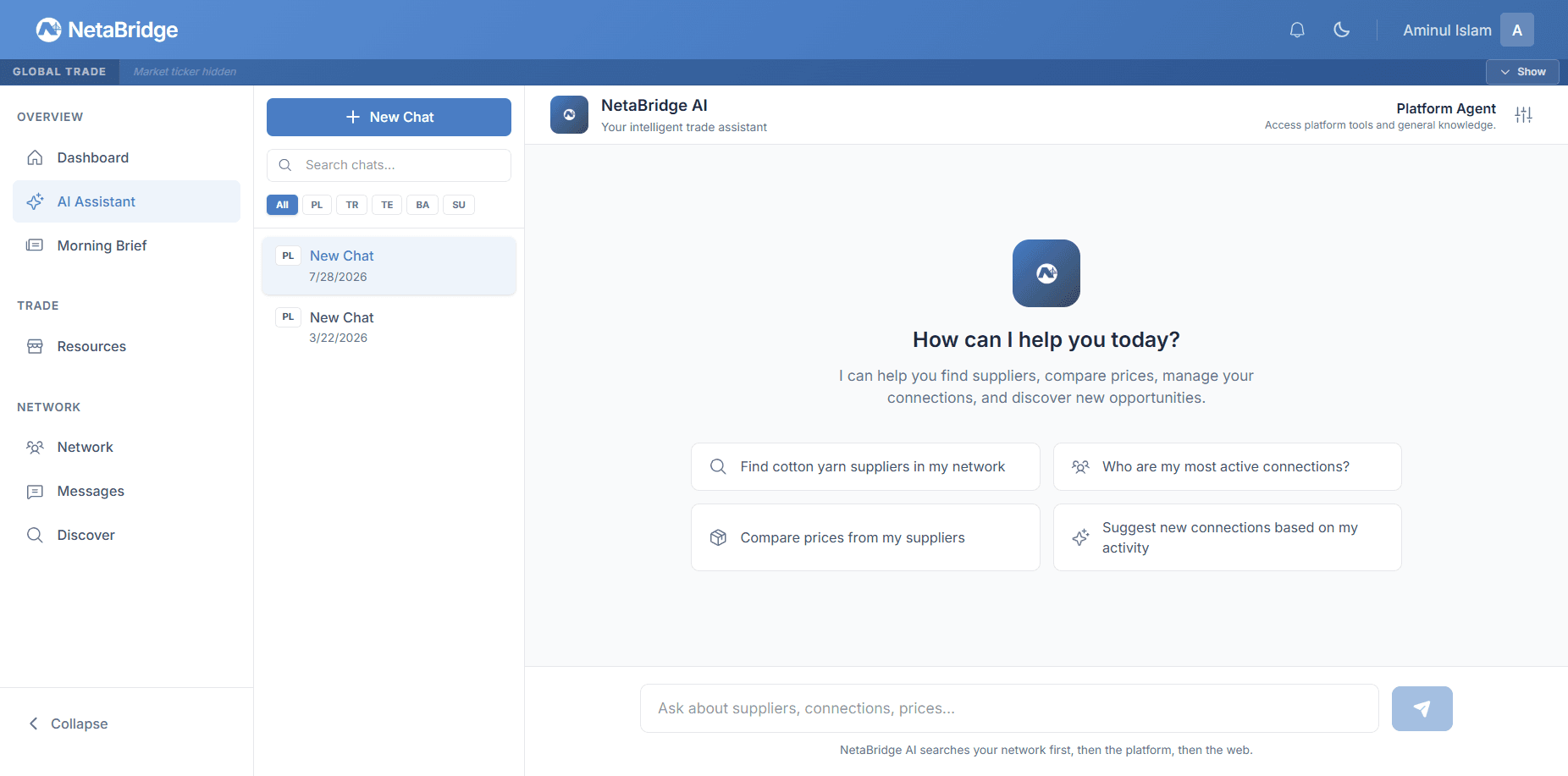
The MVP is a two-part system: ingest a broker's contacts automatically — no manual entry — and overlay a deal-tracking pipeline on top. Phase two makes that network intelligent — searchable, filterable, connectable. Like LinkedIn's 2004 address book import, the product had to be valuable to one person with zero other users on the platform.
03 — Build Process
From broker interviews to live MVP.
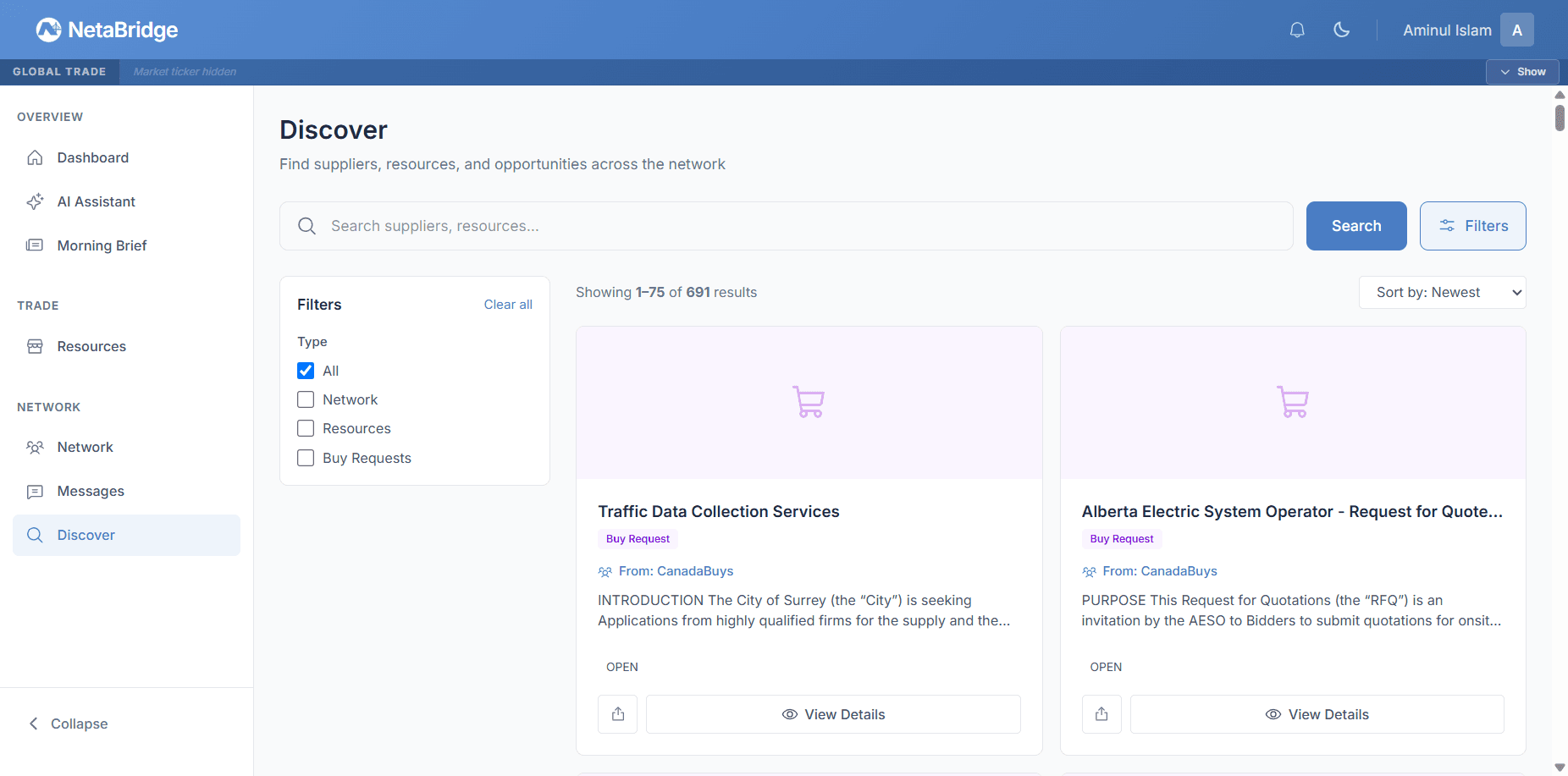
The first thing we built was a way for users to import their existing contacts — not manually, automatically. Then came a Kanban-style deal tracker where brokers can track active deals, assign contacts to opportunities, and see the status of every trade at a glance. CRM meets trade ops. The MVP is live and we are in active customer acquisition mode, turning early user feedback into product priorities.
04 — Competitive Research
The network layer always precedes the marketplace.
Our co-founder studied four defining companies — LinkedIn, Affinity, Faire, and Alibaba — to understand the order of operations. The pattern was clear: the one approach that has never worked at any scale is launching a generic, empty marketplace for “anyone who wants to trade.” We are building the network tool first. Contact ingestion → deal tracking → network intelligence. The marketplace layer grows naturally from a foundation of real users with real data — exactly like LinkedIn, exactly like Affinity.
05 — What this project taught me
The best products solve an existing behavior, not a hypothetical one.
Network before marketplace
Studying LinkedIn, Affinity, Faire, and Alibaba taught me that the playbook is always the same: build real network value for one person first, then let the marketplace emerge organically from that density. Launching empty marketplaces has never worked at any scale.
Single-user value is the foundation
The most important design constraint was: is this product valuable to a broker with zero other users? If the answer was yes, we were building the right thing. This forced us to prioritize the contact ingestion pipeline over any social or marketplace features.
The pain is in the workflow, not the vision
Early conversations kept surfacing the same problem: not the lack of contacts, but the inability to search and act on them. Solving an existing, painful workflow — rather than imagining a new one — gave us a much clearer product direction from day one.
My role as designer and frontend developer
On Neta Bridge I owned the frontend development and UI/UX design, working alongside a backend engineer and business co-founder. This dual role meant every design decision was grounded in what was actually buildable and maintainable at our current stage.
The product is live