Mobile App / Health & Fitness — 2025
An AI personal trainer in your pocket — form checked, reps counted, no gym required.
Jim Coach is a mobile AI fitness assistant born from a personal mission to lower the barriers to entry for strength training. By combining computer vision with real-time coaching, it solves the friction of knowledge, motivation, and accountability — all at once.
01 — User Research
What barriers do people face to go and work out?
I conducted a survey of 15+ gym-goers to understand the friction points. The findings were clear: Time, Exercise Knowledge, Motivation, and Cost were the killers. To make the process seamless, the solution had to be accessible, educational, and quick. A well-designed app was the only way to solve all of these at once.
“Bad form doesn't just slow your gains — it ends your training. We built the coach that catches it before it costs you.”
02 — Market Research
Identifying the 'Form Gap' in the App Store.
I analyzed top fitness apps and user reviews. While users valued custom plans and progress tracking, they were frustrated by high costs and a major gap: zero apps ensured correct form. This presented a clear opportunity — integrating live audio-visual form correction using computer vision and multimodal AI. No app could watch you back.
03 — Figma Design
Nailing the mobile experience in Figma first.
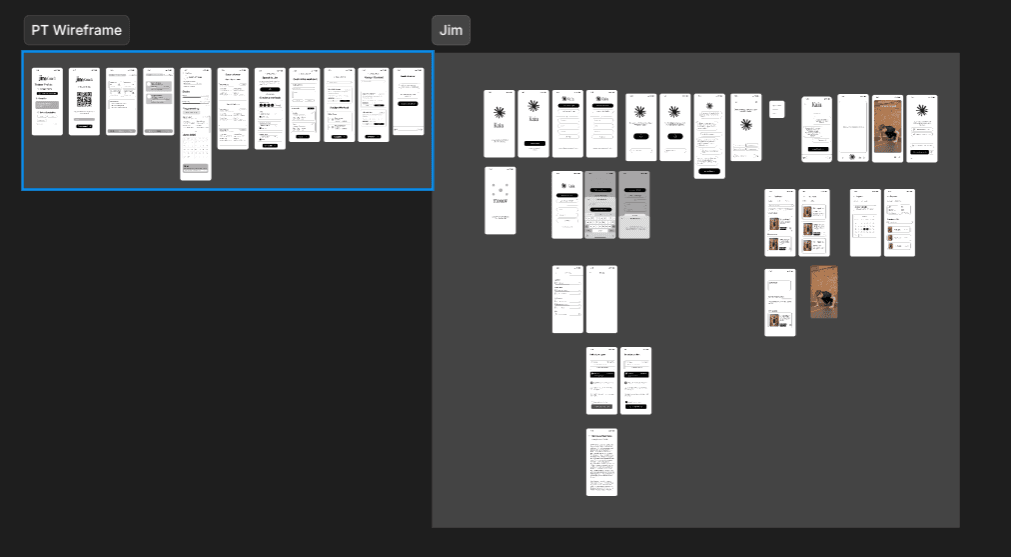
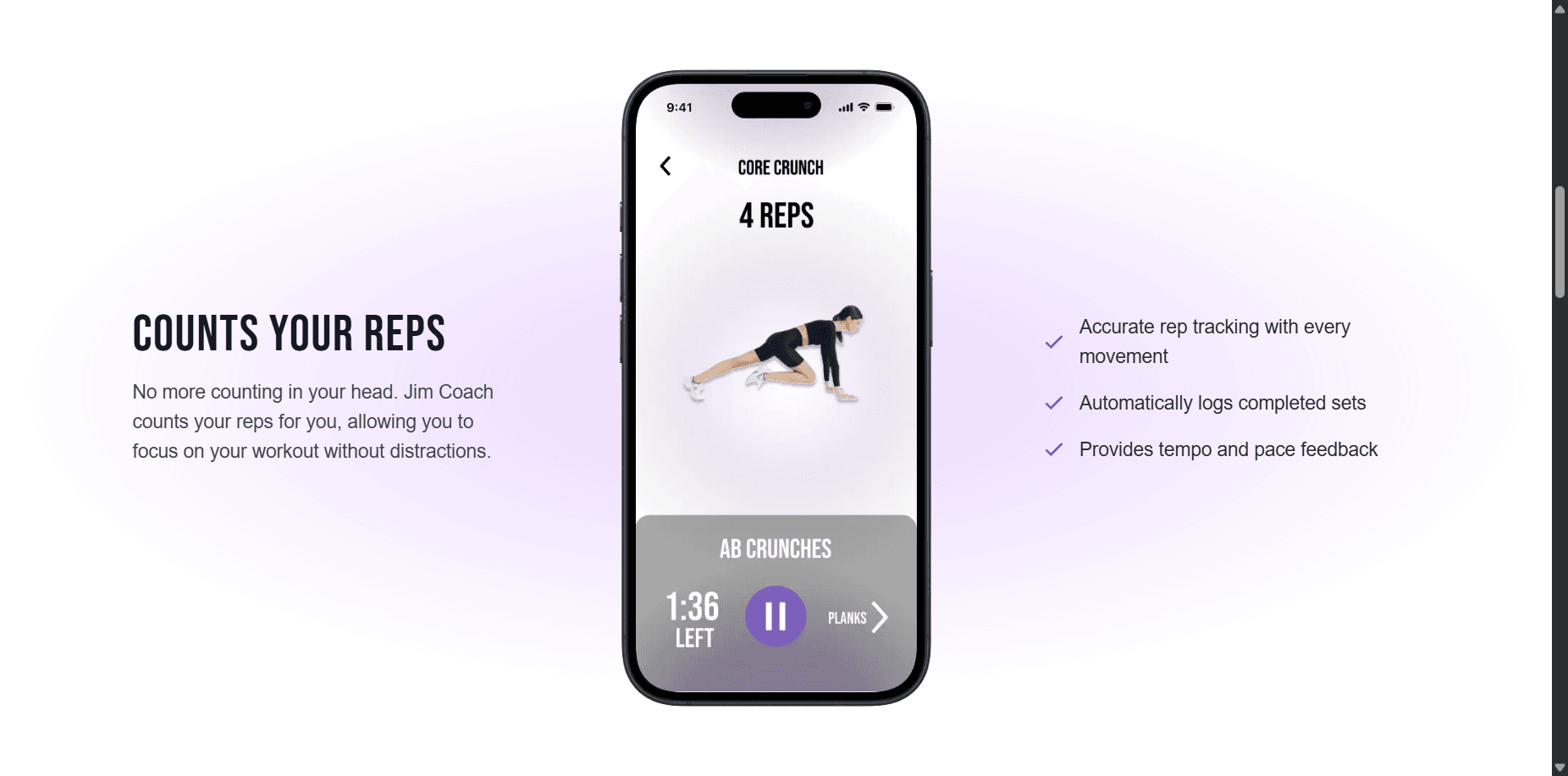
Before writing any code, I mapped out the entire mobile application directly in Figma. The interface had a strict requirement: it needed to be optimized for ‘sweaty hands’ and quick glances during intense sets. I used a sporty, stern typography style to invoke a ‘coach’ feeling — someone who is your friend but will push you to your limits. Every single interaction was prototyped in Figma to ensure the core loop of tracking form and receiving immediate feedback felt completely frictionless on a mobile device.
04 — Development & Launch
Distribution is the final boss.
I developed a web platform to test the core vision using Next.js and Framer Motion — a highly responsive experience that felt native. We launched an Alpha on Reddit, getting 100+ users who provided the critical usage data needed to iterate. Early validation was strong, but the real lesson was efficiency of distribution: instead of fighting for every user, we partnered with personal trainers who already had clients. I even got a job as a personal trainer myself to understand this properly.
Initial design and core loop mapping for the mobile app.
05 — What this project taught me
The best UX decisions came from standing in the gym, not sitting at the desk.
Validate the core loop first
Shipping a web alpha before building a native app let us validate the most important assumption — that real-time form feedback is useful in practice — without over-investing. 100+ Reddit users confirmed the loop. The form feedback worked. That signal was worth more than any prototype test.
Design for the emotional state of the user
A person mid-workout is sweaty, focused, and doesn't want to read. Every screen in Jim Coach had to be scannable in under 2 seconds. This forced a design discipline of radical reduction — if an element didn't help within one glance, it got cut.
Distribution is built, not found
Seeding Reddit worked as a proof of concept, but the real insight was that trainers are nodes of distribution. A single personal trainer brings 20 existing clients. Getting the product into that hands of trainers first — not users — was the more efficient growth path.
Research in context, not in surveys
Working as a personal trainer myself gave me a completely different understanding of what clients actually needed versus what they said they needed. Real context research — being in the gym, watching, feeling — is irreplaceable.
The alpha is live